Ceramic cookware has had a remarkable run. Brands like Caraway, Our Place, and GreenPan have built large, loyal audiences by positioning ceramic-coated pans as the healthy, natural, PFAS-free answer to Teflon: cookware that looks good on the stovetop, photographs well, and comes with a wellness story built in. It's a compelling pitch, and it has moved a lot of cooks away from traditional nonstick.

The trouble is what happens after the purchase. The nonstick performance degrades faster than most buyers expect. The words doing the most work in the marketing—natural, non-toxic—aren't defined or certified by anyone. And a premium price paired with a one-to-three-year lifespan makes ceramic one of the more expensive ways to cook, behind a sticker price that looks reasonable.

Cast iron answers the question ceramic set out to answer. Iron and fat, no coating, a surface that becomes more nonstick over time rather than less. Ceramic is a short-term convenience with a wellness story attached. Cast iron is a cooking surface that compounds, and never needs replacing.

At a Glance


Cast Iron

Ceramic Nonstick

Heat retention

Exceptional

Low to moderate

Heat responsiveness

Low

Moderate

Cooking surface

Builds nonstick over time

Nonstick from day one; degrades with use

Max oven temp

650°F

400–450°F, coating dependent

Maintenance

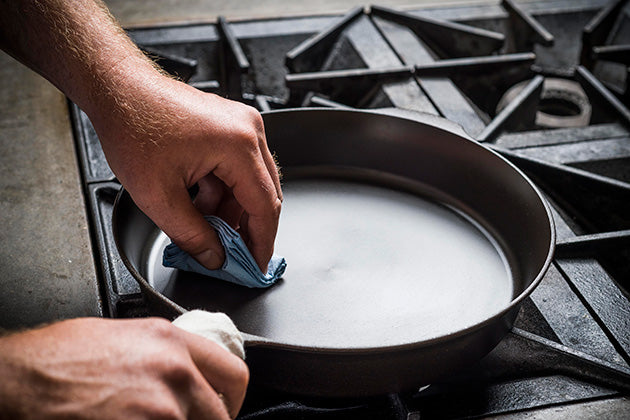
Hand wash, dry, oil after use

Gentle hand wash; no metal utensils

Longevity

Generations

1–3 years before replacement

Induction

Yes

Only with a magnetic base

Coating concerns

None — no coating

Coating degrades with heat and wear

Best for

Searing, frying, baking, eggs

Low-heat cooking; short-term nonstick convenience

Price range

$50–$200

$60–$200, replaced every 1–3 years


The Case for Ceramic

Ceramic nonstick cookware is coated with a silica-based material—silicon dioxide derived from sand—that creates a smooth, low-friction cooking surface without the PTFE compounds used in traditional Teflon. The coating is applied through a sol-gel process and cured at high temperature, producing a hard, glassy surface that releases food easily when new. Most ceramic pans are also lightweight, come in a range of colors, and are marketed as free of PFAS, PTFE, lead, and cadmium.

For cooks who want a low-maintenance non-stick surface and have concerns about traditional nonstick coatings, ceramic has appeal. Out of the box it performs well for eggs, fish, and anything delicate. Cleanup is easy. The pans look good. And the free-of marketing answers a question a lot of home cooks have started asking about synthetic coatings.

Advantages

1.

Immediate nonstick performance. Ceramic pans work from day one, with no break-in period. Food releases easily, cleanup is minimal, and the surface is forgiving for beginners and weeknight cooking.

2.

Lightweight and maneuverable. Most ceramic pans are considerably lighter than cast iron, which makes them easier to handle for cooks who find cast iron's weight tiring.

3.

Low-heat convenience. For gentle tasks—warming sauces, scrambling eggs, reheating leftovers—ceramic's low-friction surface asks for little fat and little attention.

4.

Visual appeal. Ceramic brands have invested heavily in design. Their pans often opt for trending aesthetics, which appeal to cooks looking for a curated kitchen. 


Who it's right for

Ceramic nonstick suits cooks who value low-effort cleanup and immediate food release over long-term performance, and who cook mostly at low to medium heat. It's also a reasonable transitional pan for cooks moving away from PFOA & PTFE nonstick while a cast iron seasoning develops. What it isn't is a durable primary pan. The performance window is short, and most buyers don't realize they're on a one-to-three-year replacement cycle when they buy.

The case for cast iron

Cast iron starts as an alloy of iron and carbon, melted down and poured into a mold in a single pour. What comes out is one continuous piece. No joints, no layers, no bonded surfaces to separate or fail. Just iron, cooled into the shape of a pan, with nothing to wear out and nothing to replace. The process is essentially unchanged from how it was done centuries ago.

The property that defines how cast iron cooks is heat retention. It takes longer to get hot than other materials, but once it's there, it holds. Drop a cold steak into a properly preheated cast iron pan and the surface temperature barely registers the impact. The mass of the iron absorbs it and keeps cooking, which is what builds a crust. Ceramic pans drop in temperature when cold food hits them. Cast iron doesn't. That's the difference between a sear and a steam.

The other thing that sets cast iron apart is seasoning. Cook in it regularly and fat polymerizes into the iron, building a layer that gets more effective over time. Eggs slide. Fish releases. The surface keeps improving the longer you use it. There's no coating involved and nothing to degrade — and unlike a ceramic pan, which is at its best the day you unbox it, cast iron is only getting started.

Advantages

1.

A surface that compounds over time. This is the sharpest contrast with ceramic. A well-seasoned cast iron pan is better at year five than at year one, and better still at year ten. A ceramic pan peaks on day one and declines from there. One improves with every meal. The other degrades with every use.

2.

No coating, nothing synthetic. The cooking surface is iron and seasoning. No silica layer, no sol-gel chemistry, no coating to degrade, chip, or flake into food.

3.

Heat retention. Cast iron's mass acts as a thermal battery, storing heat and releasing it steadily, which is what searing, frying, and any contact-heat cooking depends on. Ceramic pans, thin and lightly built, can't match it.

4.

Longevity. A Griswold skillet made in 1920 is still cooking eggs today. Cast iron doesn't wear out. With basic care it will outlast every other piece of cookware you own. A ceramic pan needs replacing every one to three years, sooner if you cook hot or reach for metal utensils. Over twenty years, one cast iron pan costs less than the parade of ceramic pans it replaces, and every one of those ends up in a landfill.

5.

Versatility. Cast iron works on any heat source and moves from stovetop to oven to grill to campfire with no adjustment and no temperature limit. Ceramic pans are held to roughly 400–450°F before the coating starts to break down, which rules out high-heat searing, broiling, and most outdoor cooking.

Side profile of the Field Skillet on a white background

Who it's right for

Cast iron is the right primary pan for most home cooks, not as a compromise but as the better choice for the majority of everyday cooking. It handles searing, frying, baking, and eggs better than ceramic at any stage of the ceramic pan's life, and it improves with use in a way ceramic never does. The maintenance is real but modest: dry it after washing, apply a light coat of oil, store it properly. For cooks who cook regularly, that becomes second nature quickly.


A Note on “Non-Toxic” and “PFAS-Free”

Ceramic cookware is marketed as non-toxic, natural, and PFAS-free, and that positioning has resonated with cooks who moved away from Teflon. It's worth understanding what those words do and don't mean.

Ceramic is not a regulated term in cookware. Any brand can describe any silica-based coating as ceramic, whatever else is in the formulation. Non-toxic isn't regulated either. No agency certifies it. Under the FTC Act, a brand making the claim is required to hold substantiation for it, but that's a standard enforced after the fact, if a complaint or an investigation prompts one—not a certification anyone checks before the box is printed. PTFE-free and PFOA-free name specific compounds and can be verified. Non-toxic and ceramic are marketing language.

Ceramic coatings are also not inert under all conditions. Above roughly 450°F, silica-based coatings can begin to degrade, and a scratched or chipped surface raises reasonable questions about what ends up in food. The coating that looked glassy when new looks different after eighteen months of regular use. Ceramic cookware also hasn't been studied as long as PTFE has, which means there's less known in either direction.

Cast iron doesn't raise these questions. The cooking surface is iron and polymerized fat, both of which have been in kitchens for centuries with a well-understood safety profile. For cooks who chose ceramic because they were worried about what was in their cookware, cast iron is the simpler answer.


Cast iron vs. Ceramic: our take

Ceramic answered a real question: what do you cook on if you're worried about PTFE and PFAS? The answer was appealing—clean-sounding materials, good design, easy food release, wellness credibility. It just doesn't hold up all the way. The non-toxic language isn't verifiable. The nonstick window is short. The replacement cycle is expensive. And the performance ceiling—no high heat, no searing, no oven above 450°F—limits what the pan can actually do.

Cast iron reaches the same place by a different route: a cooking surface with no coating and no replacement cycle, one that improves rather than degrades. The maintenance is modest. The performance, once the seasoning is established, is better than ceramic at any point in its life. And a well-made cast iron pan will still be cooking long after the last ceramic pan that tried to replace it has been thrown away.

Ceramic has a narrow legitimate use: low-heat cooking, for cooks who want easy cleanup and aren't asking much of the pan. For everything else, cast iron is the stronger choice, and the more honest one.

What to cook in each

Reach for cast iron for:

  • Searing steaks, chops, and chicken thighs
  • Frying—chicken, potatoes, anything that benefits from steady oil temperature
  • Eggs, once the seasoning is established
  • Cornbread, skillet cookies, and oven baking
  • Smash burgers
  • Anything that starts on the stovetop and finishes in the oven
  • Cooking over a grill or open flame
  • Any dish that requires high heat

Reach for Ceramic for:

  • Low-heat cooking where easy cleanup is the priority
  • Eggs and delicate proteins
  • Cooking within the coating's temperature limits, if pan aesthetics matter to you
  • Short-term use, understanding the pan will need replacing within one to three years

Frequently Asked Questions

Is ceramic cookware actually non-toxic?

Nobody can say definitively, which is the point. Ceramic and non-toxic aren't regulated terms in cookware, and no agency certifies either one. Claims like PTFE-free and PFOA-free are more useful, because they name a specific compound that can be tested for. Ceramic coatings are also less studied than PTFE, so the absence of known problems isn't the same as a clean bill of health.

How long does a ceramic pan last?

Most ceramic pans hold their nonstick performance for one to three years of regular use, less if you cook over high heat or use metal utensils. The pan itself doesn't break; the coating stops releasing food, which amounts to the same thing.

Can you sear in a ceramic pan?

Not well, and not for long. Most ceramic coatings begin to degrade above roughly 450°F, which is below the temperature a proper sear wants. The pan's lower thermal mass also means it drops in temperature when cold food hits it, so you get steam instead of a crust.

Is cast iron harder to maintain than ceramic?

It asks for a different routine, not a harder one. Cast iron wants to be dried after washing and given a light coat of oil. Ceramic wants gentle hand washing, no metal utensils, and no high heat. Cast iron's routine rewards you with a surface that improves. Ceramic's only slows the decline.

Should I replace my ceramic pans with cast iron?

There's no reason to throw out a ceramic pan that's still working. The more useful move is to add cast iron as the primary pan and let the ceramic handle the low-heat tasks it's good at, then not replace it when it wears out.


A note on cast iron quality

Not all cast iron performs the same way, and the difference that matters most is one you can't see until you cook on it. Wagner and Griswold pans made before World War II were machined smooth after casting, which is why they seasoned faster and released food more cleanly than the rough-cast pans that followed. Post-war manufacturers dropped that step to cut costs.

The distinction matters here because it determines how quickly you get to the nonstick surface that made ceramic appealing in the first place. A machined pan seasons faster and needs less break-in than a rough-cast one. It's why we built Field the way we did.

Considering a different material? We compare cast iron against carbon steel, stainless steel, aluminum, and ceramic individually and in our full cookware materials guide.

Field Company has been making cast iron in America since 2016. Shop our full collection of cast iron here.